
Archaeologists found honey in an Egyptian tomb that’s three thousand years old. It was still edible. That same honey, bought at any grocery store today, costs less than ten cents a serving — and it never expires. That’s S-tier. Now look at what’s probably sitting next to it in your pantry: a bag of brown rice you bought because it’s the “healthy” choice. Six months from now, it’s rancid. That’s C-tier.
Here’s how the Amish actually rank pantry staples — not by what looks healthiest on a label, but by three measurable criteria: shelf life, cost per calorie, and nutritional density, weighted 40/35/25. Shelf life comes first because the most nutritious food in the world means nothing if it’s rancid in four months.
S Tier — The Untouchables
Honey. Below 17% moisture and self-preserving through hydrogen peroxide activity, honey never spoils. It’s a sweetener, a fermentation starter, a wound dressing, and a cough remedy — one jar, four jobs. Raw and unfiltered is worth the extra cost; heated grocery-store honey loses most of its antimicrobial compounds.
Salt. Amish households buy it in 25 to 50-pound bags because salt isn’t just a food — it’s preservation infrastructure. Canning, fermenting, curing, and pickling all require it in quantity. Shelf life: indefinite. A 50-pound bag runs $15 to $25 and is the best preservation value per dollar on this whole list.
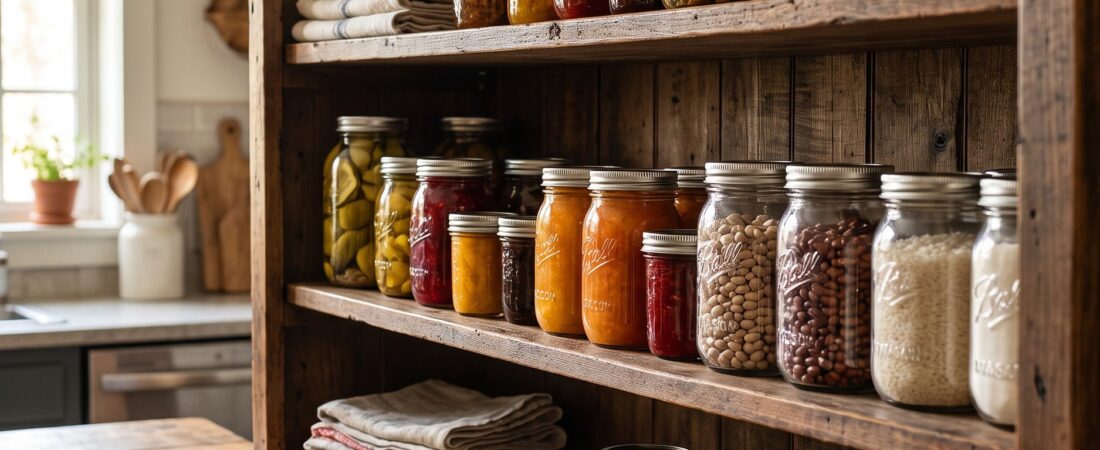
White rice. The most controversial placement here. Brown rice has more fiber and nutrients — true. It also goes rancid in six months from oils in the bran layer. White rice, sealed with an oxygen absorber, lasts 25 to 30 years. A 25-pound bag runs $15 to $20 for roughly 40,000 calories — the cheapest caloric insurance available. The Amish cover the nutrition gap with beans and oats instead.
Dried white beans. There are documented cases of hundred-year-old beans germinating. Paired with rice, they form a complete amino acid profile — nutritionally equivalent to meat. One pound makes six cups cooked for about a dollar, versus $3 to $4 for the same protein from a chicken breast that lasts three days in the fridge.
Apple cider vinegar. Six jobs in one bottle: pickling, cleaning, livestock supplement, digestive aid, hair rinse, fermentation starter. Vinegar-pickling is the simplest, safest preservation method there is — no pressure canner, no botulism risk. Look for “with the mother,” which means the active bacterial culture hasn’t been filtered out.
A Tier — One Flaw Away From S
Wheat berries. Milled flour lasts 3 to 6 months; whole wheat berries last 25 to 30 years. The only thing keeping this out of S-tier is needing a hand grain mill — genuinely one of the highest-ROI purchases for a serious pantry.
Dried lentils. Cook in twenty minutes with no soaking, 18 grams of protein per cup, and a 10 to 25 year shelf life. Stock lentils for busy nights, beans for when you have the evening.
Oats. The one S-tier-shelf-life food people actually want to eat daily, which means it gets used and rotated naturally instead of sitting untouched. Rolled oats for the pantry, steel-cut for weekend flavor.
Ghee. Butter goes rancid in two weeks at room temperature; ghee keeps one to two years. Rich in fat-soluble vitamins A, D, E, and K2. Homemade from butter on sale costs a fraction of the store-bought version.
Dried corn. The oldest pantry staple on the list, predating every other item by thousands of years in the Americas. Store whole kernels (10+ year shelf life) and grind as needed — same principle as wheat berries.
B Tier — Solid Supporting Cast
Canned tomatoes deliver flavor and bioavailable lycopene but won’t calorically sustain anyone on their own. Baking soda is what makes every other pantry item into actual bread — indefinite shelf life if stored separately from cream of tartar. Dried pasta is redundant next to rice, which does the same job for longer. Coconut oil is the best widely available substitute for what the Amish actually use — lard.
C Tier — “But I Thought This Was Healthy”
Brown rice and whole-wheat flour share the same problem: the oils that make them more nutritious also make them go rancid in three to six months. Canned beans cost three to five times more per calorie than dried, with a fraction of the shelf life — the Amish never bought a can of beans in their life.
D Tier — Buy Fresh, Use Fast, Never Stockpile
Nuts and nut butters are excellent food and a terrible pantry investment — their healthy polyunsaturated fats oxidize fastest. Protein powder solves a problem a well-stocked pantry doesn’t have. “Healthy” packaged crackers cost some of the highest cents-per-calorie on the entire list for mostly marketing.
F Tier — The Pantry Lies
Energy bars. Fifty dollars of energy bars buys about 3,000 calories with a nine-month shelf life. Fifty dollars of rice and beans buys over 80,000 calories that last 25 years. Energy bars cost 27 times more per calorie and expire 66 times faster — and they show up on nearly every “emergency food” list ever published.
Vegetable oils. Most opened bottles are quietly rancid within a year, and most people never notice. Lard, ghee, and coconut oil all outperform them on shelf stability.
Multi-grain “healthy” flour blends. Shelf life is set by the shortest-lived ingredient in the mix — almond flour goes rancid in three to four months and drags the whole bag down with it. Plain white flour, unglamorous as it is, lasts two to five years.
Five Mistakes That Destroy a Good Pantry
- Applying fresh-food nutrition logic to pantry decisions instead of prioritizing shelf stability first.
- Buying canned beans as a primary protein source instead of building the dried-bean-soaking habit.
- Ignoring oil oxidation — go smell your cooking oil right now.
- Building a one-time emergency kit instead of a living pantry that rotates through normal cooking.
- Having no real salt strategy — two weeks’ worth isn’t a preservation plan.
The Starter Five — Sixty Dollars, One Weekend
- White rice — 25 lbs sealed with an oxygen absorber: ~$15–20, 25-year shelf life, 40,000 calories
- Dried navy or pinto beans — 10 lbs sealed: ~$10–15, 25+ year shelf life
- Salt — 10 lbs sealed: ~$5, indefinite shelf life
- Rolled oats — 10 lbs sealed: ~$8–12, 20+ year shelf life
- Raw honey — 2 lbs: ~$12–18, indefinite shelf life
Total: fifty to seventy dollars, roughly 40,000 to 50,000 calories, enough to sustain one adult for six to eight weeks. It looks unremarkable on a shelf. It’s one of the most practical things a household can own.
The Amish never ranked their pantry by what looked healthiest on a label or what a food blog recommended. They ranked it by what was still feeding their family in ten years. That’s still the right question to ask before your next grocery trip.