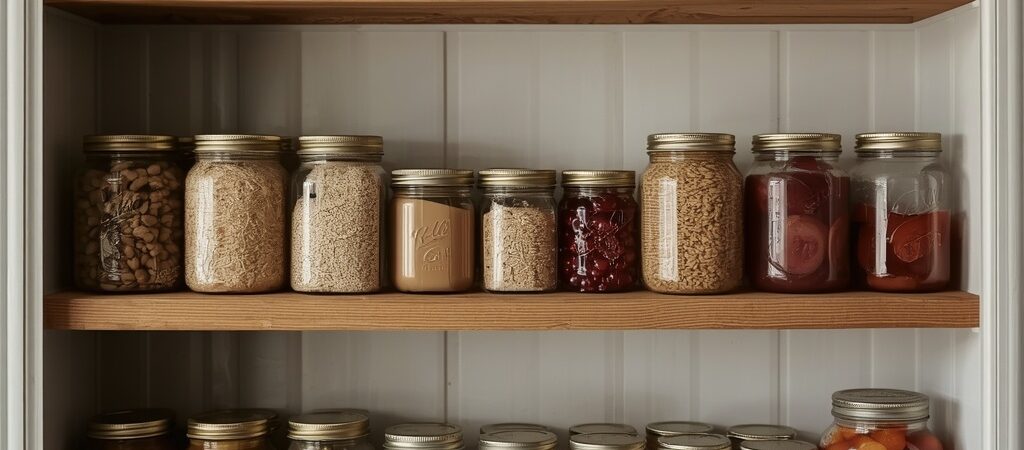
Not every food needs a fridge, a freezer, or a “best by” date to stay safe and useful. Long before either existed, a well-stocked pantry was simply how a family got through winter — and a surprising number of everyday staples, stored the right way, genuinely never go bad. Here’s the list, organized by why each one lasts.
The sugars — honey, white sugar, brown sugar
Honey is the famous one: archaeologists have found edible honey in three-thousand-year-old Egyptian tombs. Sugar is nearly as durable — its low moisture content means nothing can grow in it, provided it’s kept dry. Brown sugar is the exception that needs a little help; store it with a piece of terra cotta or a slice of bread to keep it from hardening.
Salt, in any form
Salt doesn’t spoil, full stop. It’s also the reason almost everything else on this list works — salt-cured meats, salted butter, and brined vegetables all borrow their shelf life from salt’s ability to stop bacteria in its tracks.
White rice
Stored in an airtight container away from moisture, white rice lasts effectively indefinitely. Brown rice is the exception here — its oil-rich germ layer means it only keeps six months to a year before going rancid.
Dried beans and lentils
Properly dried and sealed, beans and lentils can be stored for decades. They may take longer to cook and rehydrate as they age, but they remain safe and nutritious well past any “best by” date printed on the bag.
Pure maple syrup and molasses
Both are concentrated sugars, and both keep essentially forever unopened. Once opened, they benefit from refrigeration to prevent mold on the surface, but an unopened jar in a cool pantry is stable for years.
Vinegar (any type)
Vinegar is acidic enough that it’s effectively self-preserving — it’s the same property that makes it useful for pickling everything else on this list. Color and clarity may shift over time, but it stays safe to use.
Cornstarch
A dry, shelf-stable powder with essentially no moisture for anything to grow in. Keep it sealed and dry and it will outlast almost anything else in the pantry.
Powdered milk
Commercially processed powdered milk, stored properly in a cool, dry, airtight container, has a shelf life measured in decades — a genuinely practical dairy stand-in for long-term storage.
Hardtack and true dry crackers
The original long-haul trail food. Made from just flour, water, and salt, and dried thoroughly, hardtack has been documented lasting well over a century in the right conditions. Not appetizing without soaking, but nearly indestructible.
Wheat berries
Whole, unmilled wheat berries stored in a sealed, oxygen-free container can remain viable for twenty-five to thirty years — and unlike flour, they can still be milled fresh whenever they’re needed, which resets the clock on freshness at the point of use.
Certain hard liquors
Distilled spirits above roughly forty percent alcohol don’t spoil once sealed. It’s not a pantry staple for every household, but it’s worth knowing if it’s already on the shelf.
Instant coffee
Freeze-dried and sealed properly, instant coffee holds its flavor and safety for a remarkably long time compared to ground coffee, which oxidizes and goes stale much faster.
Round out a stockpile with baking soda, dried herbs and whole spices, apple cider vinegar, plain white pasta, and canned goods processed correctly in a pressure or water bath canner — all of it stable for years with nothing more than a cool, dark shelf.
The through-line across every item here is the same one that shows up in traditional food preservation generally: remove the moisture, add salt or acid, or seal out the air, and food stops being something that spoils and starts being something that simply waits.
If you’re building this pantry from scratch, my Stockpiling & Pantry list on Amazon has the storage buckets, mylar bags, and sealing tools I actually use.