
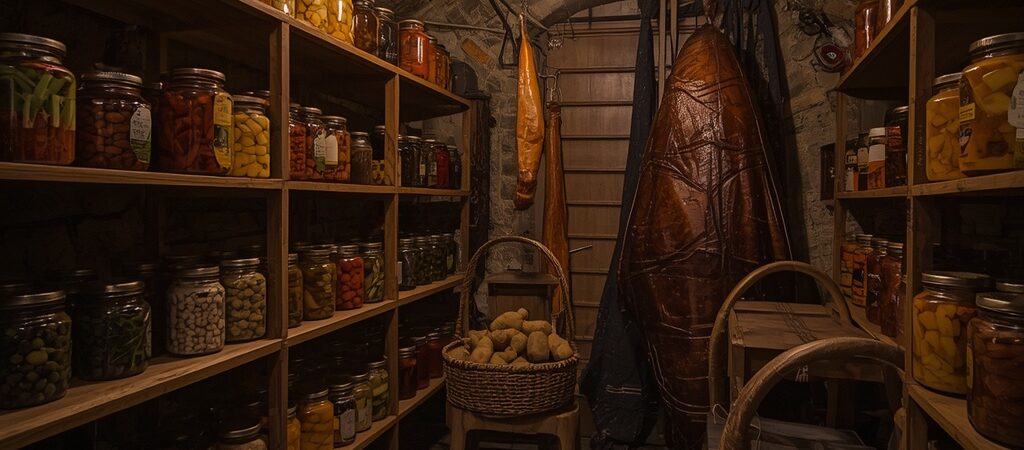
A refrigerator is barely a hundred years old. Every method below is older than that, and every one of them was developed by people who needed their food to survive a winter with no electricity involved at all. None of this is about replacing your fridge today — it’s about understanding the toolkit that existed before it, and borrowing the pieces that still make sense for a garden overflowing in August or a freezer that’s already full.
Salt curing meat
Salt pulls moisture out of meat, and bacteria can’t survive without moisture. That’s the entire principle behind a dry cure — meat packed in salt, sometimes with a little sugar and saltpeter for color, then left to cure for days or weeks depending on the cut and size. A whole ham can cure this way for a month or more before it’s ready to hang. It’s a slower process than anything from a store, and it asks for a cool space and a tested ratio of salt to meat weight, but the result is a piece of meat that keeps for months without ever seeing a freezer.
Smoking after the cure
Smoking is almost always the second step, not a replacement for salt. Cold smoke, applied over hours or days at a low temperature, adds a further layer of preservation on top of the cure — it dries the surface further and coats the meat in compounds that discourage bacteria and mold. This is why traditional smokehouses were separate small buildings: a slow, low fire tended for a long stretch, not a quick weekend project.
Root cellaring
Potatoes, carrots, beets, cabbage, and apples all keep for months in the right conditions — cool, around thirty-two to forty degrees Fahrenheit, or roughly zero to four degrees Celsius, and humid enough that the vegetables don’t shrivel. A root cellar is really just an engineered version of what the ground already does naturally below the frost line. Even without a dedicated cellar, a bin of sand in an unheated basement or garage corner can hold carrots and beets through most of a winter, refilled and checked every few weeks.
Lacto-fermentation
A cabbage packed in salt brine and left at room temperature doesn’t spoil — it ferments. The salt holds back the bacteria that cause rot while allowing the beneficial bacteria already on the vegetable to multiply and produce lactic acid, which is what preserves it and gives sauerkraut and traditional pickles their sour bite. No canner, no fridge, no special equipment beyond a jar and something to weigh the vegetables below the brine line. A single head of cabbage and about three tablespoons of salt per five pounds of vegetable is enough to start a batch that keeps for months in a cool spot.
Water glassing eggs
When hens are laying more than a household can eat — which is most of spring — fresh, unwashed eggs can be submerged in a solution of pickling lime and water, sealed in a crock, and stored in a cool spot for up to a year. The lime solution keeps air and bacteria from passing through the shell the way they normally would. It’s a method that’s fallen almost entirely out of use since refrigeration became universal, but it solves a real problem: a spring glut of eggs and a winter shortage, without ever running a compressor.
Preserving in fat
Cooked meat submerged completely in rendered fat — lard, tallow, or duck fat — and sealed from air will keep for weeks or months at cool room temperature. This is the same principle behind French confit, and it shows up in Amish and Pennsylvania Dutch kitchens too: sausage patties fried and packed into crocks under a layer of their own rendered fat, ready to reheat all winter. The fat seal is doing the same job a fridge does — keeping oxygen and bacteria away from the meat.
Drying and dehydrating
Fruit, herbs, and thin-sliced meat all preserve through the same basic mechanism as salt curing: remove enough moisture and nothing can grow. A warm attic, a wood stove’s residual heat, or simple air circulation on screens in a dry climate can dry apple rings, herbs, or jerky-style meat strips without any special equipment. Properly dried and stored in a sealed container away from light, dried food keeps for a year or more.
Every one of these methods asks for something modern kitchens have mostly traded away — patience, a cool storage space, and attention to ratios that actually matter for safety. None of them need to replace a working refrigerator. But for a garden that produced more than one family can eat this week, or a laying flock that’s outpacing breakfast, they’re the difference between waste and a stocked pantry that owes nothing to the power company.
See also: 25 Foods That Never Expire (The Amish Pantry List)
For the jars, lids, and other basics these methods call for, I keep a Preserving Essentials list on Amazon updated with what’s worth having on hand.