
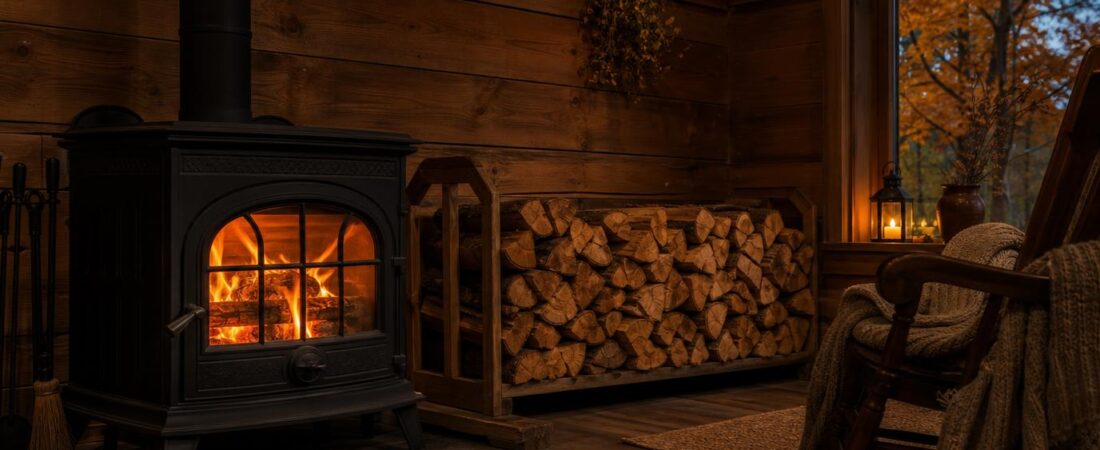
A cord of firewood runs anywhere from two hundred to four hundred dollars depending on the region, and the difference between a household that burns through two cords by February and one that makes a single cord last the whole season usually isn’t the stove — it’s a handful of habits around how that wood gets cut, stacked, dried, and burned. Amish households, many of which heat entirely with wood, treat firewood less like fuel and more like a crop that has to be managed a full year ahead. None of these nine habits require new equipment, and most of them cost nothing but a little planning.
Number One… Cure the Wood for a Full Year, Not a Few Weeks
Freshly cut, or “green,” wood can be forty percent water by weight, and a fire has to boil off that moisture before any of the heat reaches the room. Wood seasoned for six to twelve months in a dry, airy stack burns hotter, catches faster, and produces noticeably less smoke and creosote than wood cut the same season it’s burned. The practical result: seasoned wood can put out roughly a third more usable heat per log than green wood, which means burning fewer logs to keep the same room warm.
Number Two… Split It Smaller Than Feels Necessary
A three to four inch split catches faster and burns more completely than a fat, unsplit round, which tends to smolder and waste heat up the chimney as smoke rather than warmth in the room. Smaller splits also cure faster, since more surface area is exposed to air, cutting the seasoning time needed before that wood is ready to burn.
Number Three… Stack in a Single Row, Never a Pile
A tossed-together pile traps moisture in the center, where air can’t reach it, and that wood can still be damp a year later. A single-row stack, off the ground on pallets or rails, with airflow on both sides, cures evenly in a fraction of the time. It costs nothing but a little extra yard space and a straighter stacking job.
Number Four… Cover the Top, Leave the Sides Open
A tarp or simple roof over just the top of the stack keeps rain and snow off without trapping in the humidity that a fully wrapped pile would hold. Wood that’s covered top-only and open on the sides dries measurably faster than wood sealed in plastic, which is one of the most common firewood mistakes.
Number Five… Choose Hardwood for the Fire, Softwood for the Kindling
Oak, hickory, ash, and black locust burn longer and hotter per log than pine, spruce, or fir, which flare up fast and burn out just as quickly. Keeping softwoods for kindling and fire-starting, and saving the hardwood for the main burn, gets more sustained heat out of the same amount of cut wood.
Number Six… Load the Firebox Top-Down
Rather than the usual small-logs-on-the-bottom approach, a top-down fire is built with the largest splits on the bottom, medium pieces in the middle, and kindling on top, lit from above. It sounds backward, but this method burns cleaner, needs less tending, and stretches the time between reloads — often producing several hours of steady heat from one loading instead of constant small additions.
Number Seven… Close the Damper Down Once the Fire Is Established
A wide-open damper pulls heated room air straight up the chimney along with the smoke. Once a fire is burning well, closing the damper most of the way slows the burn rate and keeps more of that heat radiating into the room instead of escaping outside. Many households leave it too far open out of habit long after the fire no longer needs that much draft.
Number Eight… Add a Simple Heat-Holding Wall Behind the Stove
A stone or brick surface a few inches behind a wood stove, even a simple stacked-stone panel, absorbs heat while the fire is burning and keeps releasing it slowly for hours after the flames die down. It’s a scaled-down version of the same principle behind a full masonry heater, and it can be added to almost any existing wood stove setup for the cost of some fire brick or stone. Keep it at the clearances your stove manufacturer and local code require.
Number Nine… Cut and Split a Full Year Ahead, On Purpose
The single habit that makes every other one possible is timing: cutting and splitting next winter’s wood this spring, so it has a full season to cure before it’s needed. Buying wood off-season, in spring or summer rather than the fall rush, also tends to run noticeably cheaper, since demand and price both spike right when everyone else remembers they need it.
Stacked together, these habits are the difference between a cord of wood that barely gets a household through December and one that comfortably reaches spring — and every one of them is free to start using on wood that’s already cut. The easiest place to begin is restacking whatever’s already in the woodpile into a single, airy row with the top covered, then letting this year’s habits set up next year’s supply.
More resources: How the Amish Heat Their Homes Without Electricity: 7 Traditional Methods That Still Work · 25 Foods That Never Expire (The Amish Pantry List)