
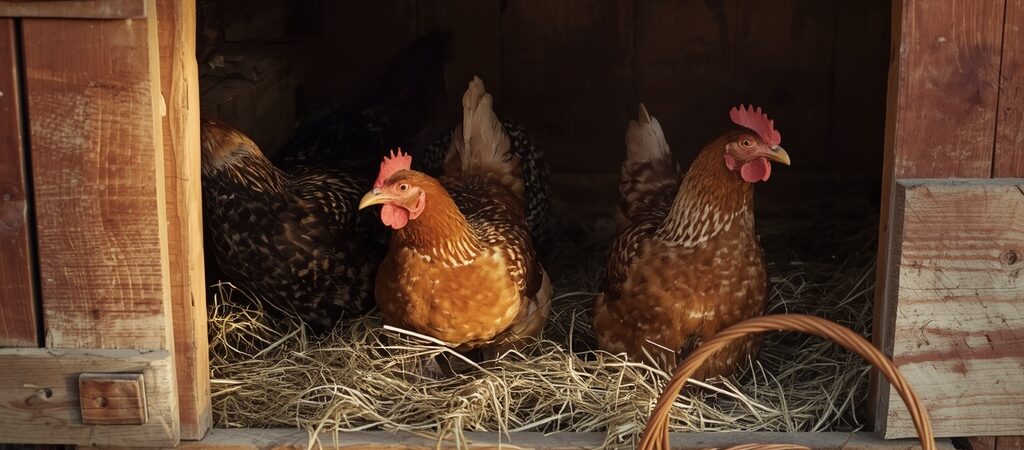
A heat lamp left running in a wooden coop is one of the single most common causes of backyard barn fires every winter — and it usually costs fifteen to twenty-five dollars a month in electricity besides. Chickens have kept themselves warm, fed themselves, and hatched their own replacements for thousands of years without a single outlet nearby. None of that knowledge has gone anywhere; it’s just been set aside in favor of gadgets that add cost and risk without adding much benefit. Here are ten ways to keep a backyard flock healthy and productive the traditional way, starting with the one change that does the most good for the least effort: how the coop itself is bedded.
Deep litter keeps a coop warm from the ground up
Instead of cleaning bedding out every week, let straw or pine shavings build up in layers, stirring in a fresh layer every week or two and letting the older layers compost in place. The slow decomposition generates real, steady warmth from below — often ten degrees or more warmer than bare floor — without a single watt of electricity, and it turns into ready-made garden compost by spring.
A south-facing window does more than any heat lamp
Positioning the coop, or even just its windows, to face south lets low winter sun pour in and warm the interior naturally through the coldest part of the day. Combined with deep litter and good draft-free ventilation up high, most cold-hardy breeds handle temperatures well below freezing without any supplemental heat at all.
Keep water from freezing with black rubber, not electricity
A black rubber feed pan absorbs enough sun to stay ice-free several hours longer than a plastic one on a clear winter day. Setting it in a sunny spot, adding a floating ball chickens peck at to keep the surface moving, or simply swapping frozen pans for warm water twice a day costs nothing but a few minutes, versus thirty to sixty dollars for a heated waterer base plus its monthly electric draw.
Fermented feed stretches a feed budget significantly
Soaking layer feed in water for two to three days before serving lets natural fermentation begin, which makes the nutrients more digestible and the feed itself expand. Most flocks eat roughly one-quarter less by volume once it’s fermented, which on a fifty-pound bag of feed is real monthly savings for the same number of eggs.
Free-ranging and pasture rotation cut costs and improve eggs
Chickens with access to fresh grass, bugs, and kitchen scraps need noticeably less commercial feed, and the yolks show it — deeper orange, and by several studies higher in omega-three fatty acids than a bird fed only pellets indoors. Moving a portable pen or run to fresh ground every week or two also breaks the cycle of parasites building up in one worn-out patch of yard.
Kitchen scraps make a real dent in the feed bill
Vegetable trimmings, stale bread, leftover rice, and garden thinnings are all fair game, and a flock of four to six hens can absorb a surprising share of a household’s food waste. The short list to skip is avocado skins and pits, raw dried beans, chocolate, and anything moldy or heavily salted — beyond that, most kitchen scraps are a free feed supplement rather than a special treat.
Diatomaceous earth handles pests without chemical sprays
A light dusting of food-grade diatomaceous earth in nesting boxes, dust-bathing areas, and along coop seams is a traditional, low-cost way to discourage mites and lice, working mechanically rather than chemically. Many keepers pair it with dried herbs like lavender, mint, or rosemary tucked into nesting material, which are traditionally used to help keep insects out of bedding.
Let hens molt and rest instead of forcing winter light
Adding artificial light to trick hens into laying through the shortest days is common advice, but it skips over what a hen’s body is doing during a natural molt — rebuilding feathers and resting her reproductive system before another year of laying. A short winter slowdown, supported with a little extra protein like scrambled eggs or sunflower seeds, tends to produce a healthier, longer-laying hen than one pushed to lay year-round under a bulb.
Predator-proofing doesn’t require an electric fence
Half-inch hardware cloth buried six inches into the ground around the run’s perimeter stops digging predators for a fraction of the cost of an electric fence system, and a simple carabiner or spring-loaded latch on every door defeats the raccoons and possums clever enough to work a basic hook. Where predator pressure is heavy, a livestock guardian dog or a pair of geese sharing the yard adds a layer of live, no-power alarm system on top.
A broody hen is a free incubator
Letting a hen who’s gone broody sit on a clutch of fertilized eggs costs nothing and produces chicks with none of the temperature-monitoring babysitting an electric incubator demands — she manages humidity, turning, and warmth entirely on her own over about twenty-one days. It won’t happen on a schedule the way an incubator does, but for a homestead that isn’t in a hurry, it replaces a seventy-to-two-hundred-dollar piece of equipment with patience and a good broody breed.
None of these methods require rewiring a coop or waiting for spring to start — deep litter can go down this week, and a fermented-feed bucket can be started tonight. Picking just two or three to try first, rather than overhauling the whole setup at once, is usually enough to see the difference in the feed bill and the coop’s peace of mind by next season.
See also: 25 Foods That Never Expire (The Amish Pantry List) and 12 Heirloom Seed-Saving Tips Amish Gardeners Never Skip
For coop and feeding supplies that fit this approach, my Chickens & Poultry list on Amazon is where I keep my current picks.